
Minnesota’s #1 NeuroStar TMS Provider
Over 20,000 TMS Therapy treatments provided
Is your teen struggling with depression that hasn’t improved, no matter what they’ve tried?
We understand how difficult it is to watch someone you love suffer. At Sonder, we’re proud to offer NeuroStar® Advanced Therapy TMS—a groundbreaking, FDA-cleared treatment for teens and adolescents aged 15–21 experiencing Major Depressive Disorder (MDD).
This approach isn’t just new. It’s transformational.
Is TMS Therapy Right for Your Teen?
What is TMS?
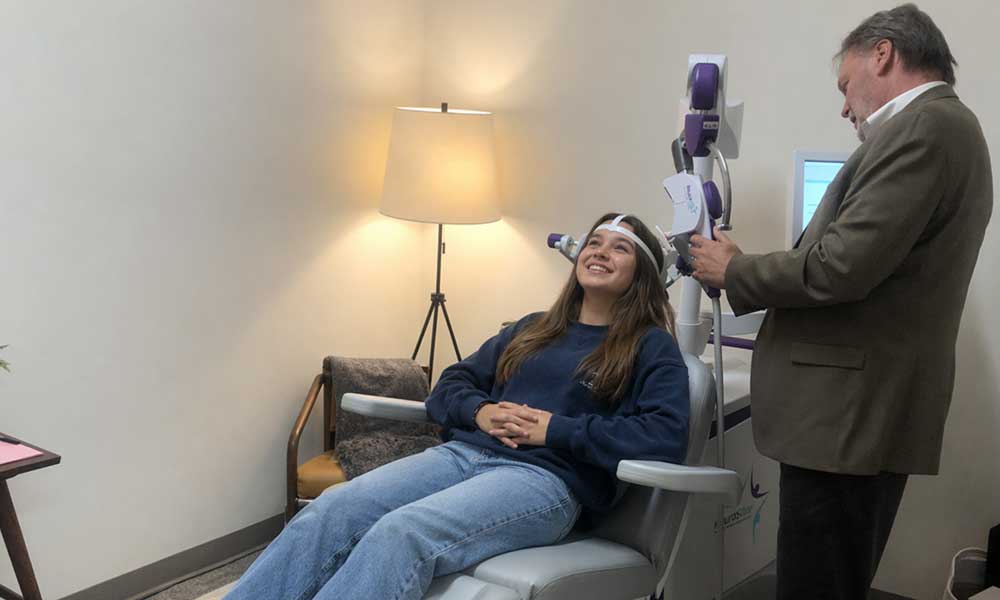
TMS stands for Transcranial Magnetic Stimulation, a non-invasive, non-drug therapy that delivers gentle magnetic pulses to the part of the brain shown to be underactive in depression. These pulses help stimulate activity and improve mood regulation, without medication side effects or sedation.
Unlike ECT (electroconvulsive therapy), TMS requires no anesthesia, has no memory loss risks, and is well tolerated by most patients.
At Sonder, our outpatient TMS sessions take place in a comfortable, calm setting. Each treatment lasts between 4–40 minutes, depending on the protocol selected by your provider. Your teen will be awake, alert, and able to return to school or daily life immediately afterward.
TMS for Adolescents: What You Need to Know
FDA Cleared, First in Its Class
In a historic advancement for adolescent mental health, NeuroStar is the first and only TMS treatment approved by the FDA for use in adolescents (ages 15–21) with MDD. This clearance represents a new gold standard in depression care for teens, particularly those who haven’t responded to therapy or medication.
Backed by Real-World Results
Over 1,000 adolescents have already received NeuroStar TMS in real-life settings.
- 78% experienced a clinically meaningful reduction in their depression symptoms.
- The FDA clearance was based on this compelling data from NeuroStar’s proprietary TrakStar® platform.
Safe, Effective, & Proven
TMS does not circulate in the bloodstream and comes without common medication side effects like weight gain, fatigue, or sexual dysfunction.
Mild side effects may include headache or scalp discomfort, usually resolving after the first week.
When used alongside existing treatment plans, TMS has shown remarkable safety and efficacy, helping teens finally find relief.
Quick Access to Care
NeuroStar’s cutting-edge coil design means there’s no delay in offering TMS for adolescents.
Sonder’s TMS services are ready for your teen today!
Changing the Future of Mental Health
An estimated 4.3 million adolescents in the U.S. live with major depressive disorder. TMS expands the treatment landscape, offering a practical and powerful solution when other treatments fall short.
We’re proud to bring this life-changing technology to families in our community and to walk beside you on the path to healing.
Is TMS Right for Your Teen?
NeuroStar TMS is cleared for adolescents (ages 15–21) with Major Depressive Disorder who have not improved with antidepressants or therapy alone.
TMS is covered by many insurance plans, including Medicare, Medicaid, Tricare, and most commercial providers. Our team can help you explore coverage and financing options.
Explore More on TMS
Looking to learn more? Check out our related posts:
Ready to start the process?
The NeuroStar Advanced Therapy System is indicated for the treatment of depressive episodes and decreasing anxiety symptoms for those who may exhibit comorbid anxiety symptoms in adults and adolescents (15 and older) suffering from Major Depressive Disorder (MDD) and who failed to achieve satisfactory improvement from previous antidepressant medication treatment in the current episode. The NeuroStar Advanced Therapy system is intended to be used as an adjunct for the treatment of adult patients suffering from Obsessive-Compulsive Disorder (OCD). NeuroStar Advanced Therapy is only available by prescription. A doctor can help decide if NeuroStar Advanced Therapy is right for you. Patients’ results may vary.
Visit neurostar.com for full safety and prescribing information.
*Outcomes Registry data was published by Sackeim HA, et al. J Affective Disorders, 2020, 277(12):65-74. The outcomes reported represent the subset of study patients for which the CGI-S data was reported before and after an acute course of NeuroStar TMS. Patients were treated under real-world conditions where patients may have been prescribed concomitant depression treatments including medications. “Measurable relief” was defined as a CGI-S score <=3 and “complete remission” was defined as a CGI-S score <=2 at the end of treatment.